>> Eat the World Los Angeles: Far East Asia
Showing posts with label Far East Asia. Show all posts

Friday, 7 July 2023

Habuya Okinawan Dining

Exterior facade

๐Ÿ‡ฏ๐Ÿ‡ต JAPAN (Okinawa)
๐Ÿ“ 14215 Red Hill Avenue, Tustin, Orange County
๐Ÿ…ฟ️ Ample parking in plaza
๐Ÿฅค Beer, plum wine, sho chu, awamori

If it happens to be your first time opening the door to Habuya, tucked into a corner of a Tustin plaza anchored by a Stater Bros., you will immediately chastise yourself for not becoming a regular much sooner. Open since late 2010, the small Okinawan izakaya is obviously popular with a regular following, the restaurant is normally full and can require a wait even on a weeknight when you have not made reservations ahead of time.

No matter how long it turns out to be, it will be worth waiting for this special cuisine. Once you sit down your senses are bombarded, first with color on every surface. This is followed by the swooning Okinawan voices and three-stringed lute known as a sanshin that really defines that island's music. Soon your nose and tongue will join in this bombardment as the kitchen's small plates start arriving quickly after an order goes in.

Colorful interior

Like any good izakaya, Habuya excels in their alcoholic beverage offerings, with ice cold Okinawan Orion draft beer ($8.50, below) served in even icier mugs, as well as Japanese sho chu and Okinawan awamori. This last offering is unique to Okinawa, made from long grain rice distillation and ancient trade patterns that connected Okinawan and Thai drinking cultures.

Even before anything hits your table, smiles across your face will be unavoidable. It is an absolute joy just to be here, and the friendly staff only make it better. They seem to be doing one hundred things at all times but also treat each customer as if they were a longtime regular that was there from the very beginning.

Orion draft beer in an icy mug

Tsukemori (homemade pickles)

Most plates are small but the appetizer section has the smallest dishes, so order an array of them to get as many flavors on the table as possible. A plate of tsukemori ($7.80, above) works to get the taste buds active and the flavorful homemade pickles can be popped in between courses when necessary throughout the meal.

On the complete opposite end of the spectrum, an order of jimami ($6.50, below) is smooth and slightly sweet. This Okinawan specialty is a tofu made from peanuts and on its own just has a hint of sweetness from those groundnuts. A side of sweetened soy sauce comes with it though to satisfy the sweet tooth and bolster the natural flavors.

Jimami (homemade peanut tofu)

Ika geso (fried calamari)
$7.80 Ika geso (fried calamari).

Mimiga nira (pig ear with chives in spicy sauce)
$6.80 Mimiga nira (pig ear with chives in spicy sauce).

Beni imo (fried Okinawan purple yam)
$7.80 Beni imo (fried Okinawan purple yam).

Sausage & shishito
$7.50 Sausage & shishito.

Soki soba (with pork rib)

A bowl of Okinawan soba should be a part of any meal here, and they will bring small bowls to share if you come as a group. The soki soba ($15, above) is a terrific way to try both the Okinawan-style wheat soba and the beautiful stewed pork rib that can be ordered a few different ways. The rib itself is tender and fatty and lives in a rich broth that has taken on a lot of its flavors, and the soba itself (suba in Okinawan) might resemble a cross between udon and egg noodles.

While often a divisive vegetable, a dish with bitter melon is also a necessary part of an Okinawan meal. If you have had bad experiences in the past, give it one more shot as the Okinawan preparation is usually a bit more mild because it is combined with meaty flavors. The goya chanpuru ($8.80, below) is a sautรฉ of bitter melon, spam, egg, and tofu, and gets topped with dried bonito flakes. None of the dishes shown here, even those without a paragraph to describe them, were disappointing. This restaurant is highly recommended.

Goya chanpuru (sauteed bittermelon, spam, egg tofu)

Nasu miso (eggplant and pork)
$8.80 Nasu miso (eggplant and pork).

Saba (fried blue mackerel)
$8.50 Saba (fried blue mackerel).

Kara hama (hamachi carpaccio)
$16 Hamachi carpaccio.

Yuzu sea salt ramen
$16 Yuzu sea salt ramen.

๐Ÿ‡ฏ๐Ÿ‡ต๐Ÿ‡ฏ๐Ÿ‡ต๐Ÿ‡ฏ๐Ÿ‡ต

I COULD USE YOUR HELP
Eat the World Los Angeles is and always has been free. It is a hobby born of passion and never solicits money or free food from restaurants. No advertisements block the content or pop over what you read. If this website has helped you explore your city and its wonderful cultures a little better please tell your friends about us and if you have the means to contribute, please consider doing so. Eat the World Los Angeles is a labor of love, but also takes a lot of money and time everyday to keep running.
Thank you!

VENMO: @JAREDCOHEE
CASH APP: $JaredCohee
PAYPAL: (no account necessary, use link)

Thursday, 25 May 2023

Ramen Josui ๅฆ‚ๆฐด

Artesia Blvd. facade

๐Ÿ‡ฏ๐Ÿ‡ต JAPAN
๐Ÿ“ 2212 Artesia Blvd., Torrance, South Bay
๐Ÿ…ฟ️ Ample parking in plaza
๐Ÿฅค Beer, sake, and shochu

If you have ever traveled to Nagoya, it is almost a certainty that you sought out the small ramen shop known as Tokugawacho Josui Honten, a chukasoba-style purveyor that specializes in simple shio bowls but dips its toes into many others. It was almost stunning when they decided to open a branch in North Torrance in the spring of 2019, and even more stunning that besides local South Bay communities this opening went fairly unnoticed.

Just over four years from their grand opening, Ramen Josui is still crafting delicious bowls of their signature dish and has other reasons to visit as well. The shop is usually full of a good mixture of patrons from all over Gardena and Torrance, with mixed families, non-Japanese, and always a few solo male diners at the bar coming after work nearby.

6 piece chicken wings
The 6 piece order was a "mistake" the first visit.

10 piece fried chicken wings
The 10 piece order is necessary ever since.
 
Even those customers that have never been to Nagoya or heard about this ramen shop will immediately see the connection, which is alluded to in a few spots on the menu. The large city in central Honshu is often passed over as people go between Tokyo and Kyoto/Osaka, but it has culinary treasures all its own and should not be skipped if given the time. Thankfully residents of the South Bay and Greater Los Angeles now have access to good renditions of the famous shop's food.

If you are debating a chicken appetizer, skip the karaage (a much better version is available at nearby Hakata Ikkousha Ramen and other locations) and go straight for the fried chicken wings ($6.75, above). More than other starters, these are a specialty of Nagoya and prepared in the style most popular there: full of white pepper and garlic and dipped in a seasoned, citrus-y soy sauce. These will beat 99% of wings in the area and are the real finger-lickin' good chicken.

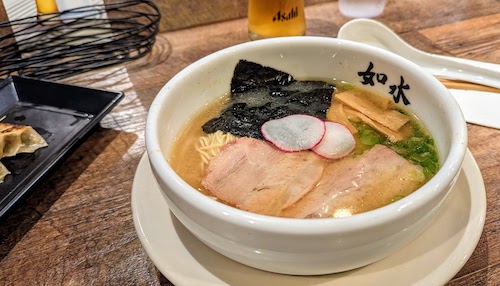
Josui ramen

The namesake Josui ramen ($10.80, above) has the pork and chicken stock the shop is recognized for, and is almost always the bowl underneath the Japanese men who come to solo slurp. This is a good indication that it should be your starting point on the menu, despite its very simple look and presentation. Plenty of extras are listed on the menu if you desire, but the bowl without additional toppings is just as good as anything.

The menu describes the stock being "finished with fish," but one sip will reveal a well-balanced niboshi depth. This complexity works very well with the shio characteristics, and the noodles are always skillfully cooked. Two pieces of very thin, buttery chashu are layered over the finished product, and are good enough that you might consider an extra order when you come again.

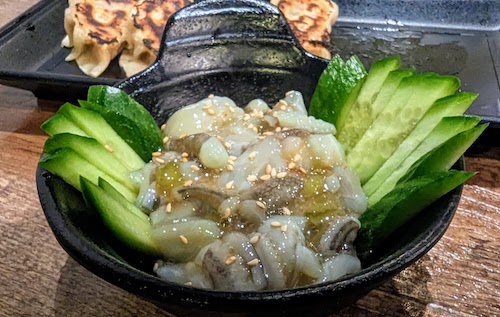
Takowasi

There are other worthy appetizers if you want more on your table besides the fried chicken wings, like the takowasa ($4.50, above), fresh raw octopus covered in zippy wasabi. This izakaya classic is especially good when paired with some of the shop's more rich and creamy bowls of ramen.

The gyoza ($5.50, below) come in an order of five and are quite small, leaving plenty of room in the stomach for the full bowls of ramen to be finished. They will likely not be the show-stopper of any meal, as gyoza never really are, but they do have their place and will not let you down.

Gyoza

Miso ramen

When you come enough you might want to venture to other bowls, which other customers seem to be enjoying next to you. A bowl of miso ramen ($11.50, above) is supremely rich and creamy, combining their signature stock with miso and adding ground chicken, bean sprouts, and sweet yellow corn. A chunk of butter is laid on top and can be mixed in for an extra chance of heart attack, but really this can be removed if you feel the broth is rich enough.

The tantan men ($13, below) seemed especially popular with reviewers online, and comes nicely un-spiked with spice as it should. Many random ramen shops load this style with too much heat to cover up the lack of flavor, but this is more along the lines of the much more tame version that first arrived in Japan from China (filtered through notoriously mild Shanghai flavor palates). The bowl is heavy with sesame creaminess and a good depth of flavor, so it could use a touch more spice if you please.

Tantan men

Ventures to these other options unfortunately left a longing for the namesake bowls enjoyed on previous visits. When the shoyu is eventually ordered someday it will be added to this space, but if it were not clear already any first order should be the Josui ramen.

The overcast days and misty mornings of May in Los Angeles are perfect weather for ramen. Before endless summer arrives and other foods are more desired, get in a few trips for Nagoya-style noodles before it gets too hot.

๐Ÿ‡ฏ๐Ÿ‡ต๐Ÿ‡ฏ๐Ÿ‡ต๐Ÿ‡ฏ๐Ÿ‡ต

I COULD USE YOUR HELP
Eat the World Los Angeles is and always has been free. It is a hobby born of passion and never solicits money or free food from restaurants. No advertisements block the content or pop over what you read. If this website has helped you explore your city and its wonderful cultures a little better please tell your friends about us and if you have the means to contribute, please consider doing so. Eat the World Los Angeles is a labor of love, but also takes a lot of money and time everyday to keep running.
Thank you!

VENMO: @JAREDCOHEE
CASH APP: $JaredCohee
PAYPAL: (no account necessary, use link)

Monday, 17 April 2023

Shoya

Pacific Coast Highway facade

๐Ÿ‡ฏ๐Ÿ‡ต JAPAN
๐Ÿ“ 1920 E. Pacific Coast Highway, Lomita, South Bay
๐Ÿ…ฟ️ Ample parking in plaza
๐Ÿฅค Beer, shochu, and sake

If you make your reservation right at 18:00 when Shoya opens, there could not be a more stark change as you pass through the door and escape this busy stretch of Pacific Coast Highway. The calm and quiet interior is decorated minimally and the kitchen is ready to spring into action for the night. As the evening wears on the space gets a bit more lively, as any izakaya does, but Shoya at any hour is a retreat from a busy day in California.

A two person husband and wife team take care of absolutely everything at Shoya, a place that runs like clockwork. The closed sign flips to open precisely at 18:00, and there are only nine seats so customers are asked to make reservations to allow them to prepare adequately. Your table settings will be laid out when you arrive, and any tardiness must be phoned in so that they are not forced to give away your spot.

Interior showing proprietor talking to two customers

Clockwork does not necessarily mean speed, as almost every dish is prepared by one chef. Come with a couple hours to spend and enjoy this leisurely pace as you will most likely order at least a dozen small dishes and they will come to you at a well-timed pace. Draft beer, hot and cold sake, and plenty of shochu options make this a proper izakaya, so order your favorites and settle in for a very unique experience that you will not want to ever come to an end.

Drinking culture in Japan like most of the rest of the world revolves around eating meals with friends and loved ones. The characters for izakaya (ๅฑ…้…’ๅฑ‹) can be found everywhere in the country, on red lanterns, hanging doorway fabrics, or signs in the windows of businesses. Whether seen as a problem or a positive, many workers head to izakayas when they clock out and spend time eating and drinking with coworkers. At a very minimum, at least everyone is always fed very well when they go out to drink.

Sake in ceramic tokkuri (flask) and o-choko (cup)

Despite being an izakaya, Shoya is more renowned for their food, but still offer good drinks. No matter what your reason for coming, you are bound to be satisfied by this excellent institution, which has lived here for almost ten years now. You will see most of the other customers are regulars chatting with the owners in Japanese, it almost seems like they all are old friends.

While a wonderful assortment of items are available, Shoya has a bit of a specialization in oden, which should not be missed. While oden is often served more in wintertime, Shoya has it year-round and each piece added to the soup has quite a bit of delicacy and precision. The oden itself is the lighter version enjoyed in Tokyo and the Kanto region of Japan. All dishes here are shown in the order they were presented.

Oden with shirataki (yam noodles)
Oden with shirataki (yam noodles) ($3)

Dried file fish
Dried file fish ($8)

Oden with hampen, chikuwa, chicken ball, and fish ball
Oden w/ hampen ($3), chikuwa ($3), chicken ball ($5), fish ball ($5)

Cold tofu
Cold tofu ($5)

Potato salad
Potato salad ($7)

Daikon salad
Daikon salad ($6)

Miso soup
Miso soup ($4)

Shoya salad
Shoya salad ($7)

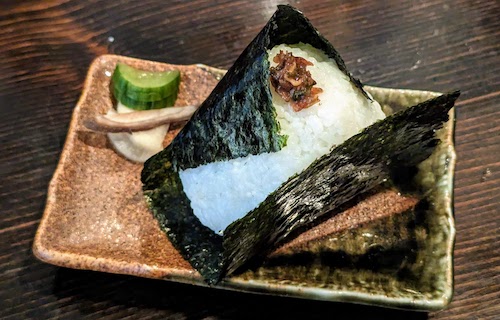
Rice ball with plum
Rice ball with plum ($7)

Grilled wild chicken
Grilled wild chicken ($11)

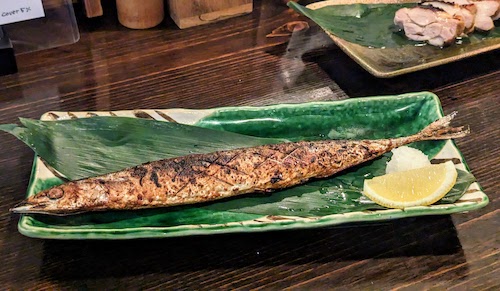
Pike fish
Pike fish ($9)

Chicken tomato stew
Chicken tomato stew ($13)

Dashi maki
Dashi maki ($8)

๐Ÿ‡ฏ๐Ÿ‡ต๐Ÿ‡ฏ๐Ÿ‡ต๐Ÿ‡ฏ๐Ÿ‡ต

I COULD USE YOUR HELP
Eat the World Los Angeles is and always has been free. It is a hobby born of passion and never solicits money or free food from restaurants. No advertisements block the content or pop over what you read. If this website has helped you explore your city and its wonderful cultures a little better please tell your friends about us and if you have the means to contribute, please consider doing so. Eat the World Los Angeles is a labor of love, but also takes a lot of money and time everyday to keep running.
Thank you!

VENMO: @JAREDCOHEE
CASH APP: $JaredCohee
PAYPAL: (no account necessary, use link)

Monday, 6 February 2023

่Œœ่Œถๅฑ‹ Akane Chaya

Redondo Beach Blvd. facade

๐Ÿ‡ฏ๐Ÿ‡ต JAPAN
๐Ÿ“ 1610 W. Redondo Beach Blvd., Gardena, South Bay
๐Ÿ…ฟ️ Large parking lot for plaza
๐Ÿฅค Draft and bottled beer, wine, sake

It almost appears at first like two separate storefronts, but the "Spaghetti & YOSHOKU" in large letters belong to Akane Chaya and describe succinctly why most people are eating there. Mobbed during weekday lunches by people who work nearby in the many Japanese businesses of Gardena and Torrance, this is the best time to come for the full experience and popularity of western-influenced Japanese cuisine known as yoshoku (ๆด‹้ฃŸ, or literally "western food").

Akane Chaya opens at 11:30 for lunch, and often people are waiting to get in to be the first to receive the restaurant's wonderful combo plates (and free iced tea before noon). No matter how busy its tables and kitchen are during lunchtime hours, the jazz piano standards playing over the restaurant's sound system will calm your mood and transport you into a lounge or a film with a very good soundtrack.

The largest table is used for individual diners when there are no large groups

Silverware for each diner, including ribbed fork for easy pasta twirling

Yoshoku is a catch-all term that includes a wide range of foods in Japan. The history of its development goes back to the latter half of the 1800's when Japan started opening itself to the rest of the world after ending long-running policies of exclusion. To this day the country continues to improve upon some of the most beloved products from around the world, from Scotch whisky to Neapolitan pizza. With the recent closing of nearby N Cafe, one of the city's strongest Yoshoku purveyors, a new place for Japanese spaghetti was necessary.

Thankfully the Los Angeles area is blessed with quite a few options due to the breadth of Japanese culture that runs many generations. The demands of this community lead to a great amount of what you can find in Japan also being available here in town. Akane Chaya has been open since 1991 and specializes in that beloved spaghetti and all its many forms, but also Hamburg steaks and curry.

Combo items served before the main plate including salad, soup, and bread

If you come with a big enough appetite, the best way to first experience Akane Chaya is through one of their enormous "super" combos, which add a plate of Japanese-style curry and white rice to already large portions of spaghetti, Hamburg steak, and pork cutlet. Any combo comes with a crisp green salad, hot soup of the day, and a freshly baked bread roll, making it plenty of food for two although it does not seem like anyone is sharing their delicious meals here.

All combos include one of the restaurant's many choices for spaghetti combined with either a portion of Hamburg steak or fried pork cutlet. The "A" SUPER Combo ($23.60, below) seen below includes the steak and the Akane-style tarako (cod roe) spaghetti. While the seafood, clam, and meat varieties of spaghetti are all enjoyable, the tarako is maybe the most special and a must try if you have not yet.

"A" SUPER Combo with spaghetti, Hamburg steak, and curry

The squid and mushroom tarako pasta that Akane Chaya puts at the top of their list is a great start, also with hints of parsley, garlic, red chili pepper, and olive oil. Thin slices of squid and white and king mushrooms make a good texture complement with spaghetti, while the cod roe coats everything with the signature taste.

A perfectly cooked egg-shaped Hamburg steak is covered with the restaurant's signature demi-glace brown sauce and makes the second component of the combo plate, alongside a full garden of greens covered a citrus-y dressing. The super combo upgrade of the curry plate can be seen in the background above, and is as comforting as you can find around town.

Tarako kinoko ika pasta

The tarako kinoko ika ($14.50, above and below), like all pasta varieties, can also be ordered on its own and comes with a small bowl of salad and fresh roll. The more traditional version of this cod roe, squid, and mushroom pasta can come in either a salt or soy sauce base, and comes covered with a nice addition of finely chopped seaweed.

Akane Chaya is the type of place that could easily become a lunch or dinner option that you find yourself in at least once a week, and by the look of things at other tables, that is indeed the case as most customers already know their order without looking at the menu. It can be very busy at times but the whole operation is so well cared for by its staff that you never feel put off even when there is a bit of a wait. And while you clean your plates and feel like you can no longer move, it will all seem worth it.

Pasta on a fork

๐Ÿ‡ฏ๐Ÿ‡ต๐Ÿ‡ฏ๐Ÿ‡ต๐Ÿ‡ฏ๐Ÿ‡ต

I COULD USE YOUR HELP
Eat the World Los Angeles is and always has been free. It is a hobby born of passion and never solicits money or free food from restaurants. No advertisements block the content or pop over what you read. If this website has helped you explore your city and its wonderful cultures a little better please tell your friends about us and if you have the means to contribute, please consider doing so. Eat the World Los Angeles is a labor of love, but also takes a lot of money and time everyday to keep running.

Thank you!
VENMO: @JAREDCOHEE
CASH APP: $JaredCohee
PAYPAL: (no account necessary, use link)

Monday, 16 January 2023

์„ฑ๋ถ๋™ Seong Buk Dong

6th Street facade

๐Ÿ‡ฐ๐Ÿ‡ท SOUTH KOREA
๐Ÿ“ 3303 W. 6th Street, Koreatown, Central Los Angeles
๐Ÿ…ฟ️ Small parking lot (shared with busy Dan Sung Sa), valet at night.
๐Ÿฅค No Alcohol

It is not breaking news to proclaim that Los Angeles has so much. Even if you have wandered the many market alleys and food streets of Korea's cities, found something unique that you have never eaten before, and come back home with fond memories, many times you can find renditions here. Much of the depth of Koreatown is hidden from those that cannot read Korean language, but if you do some simple cutting and pasting you can often find the treasures you seek.

One treasure from enough trips through those food streets will eventually be the section with stacked aluminum bowls, pre-filled with cuts of fish (or other meats), kimchi, daikon, and topped with green vegetables, all ready to be simmered down and served. These are one of many varieties of jorim (์กฐ๋ฆผ), a type of reduced stew that transfers a bowl full of broth flavor into the cuts of meat that remain after reduction.

Stacked bowls of braised cutlassfish (๊ฐˆ์น˜ ์กฐ๋ฆผ) ready to cook in Namdaemun market
Braised cutlassfish in Namdaemun's Hairtail Alley.

Those seemingly old and bruised bowls are on many of the tables at long-running 6th Street restaurant Seong Buk Dong. Younger groups of Koreans will be ordering plates of galbi jjim to eat with their black ttukbaegi of beef soondobu, but many of the older Korean customers at the restaurant will have jorim in front of them along with a wide range of banchan. While the jorim in question here swaps out hairtail for mackerel, the experience of the dish is very close to what you can find in Namdaemun Market's Hairtail Alley (above), where the cutlassfish is king.

The name of the restaurant refers to one of Seoul's northern "suburbs" up in the foothills, the village (dong) of seongbuk where the proprietor and chef spent a good portion of her life before moving to Los Angeles. But she was originally from the south of the country, and cooks the food with the flavors you might find in Gyeongsangnam-do, something that has not been altered in the restaurant's decades of life in Koreatown.

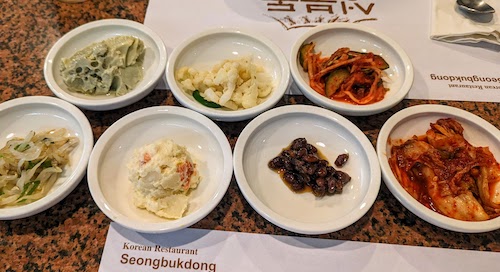
Banchan served with meal

If you have a big enough group, an order of that galbi jjim the kids at the next table are enjoying is fine enough and will not disappoint, but this is not what the chef does best. Look towards the tops of each column for what could be defined as the quintessential dishes at the restaurant, and near the end in the fish section you will find the godeungeo jorim ($29.99, below, ๊ณ ๋“ฑ์–ด์กฐ๋ฆผ) at the top. This is the dish that brings back Hairtail Alley despite using a different fish, or favorites like Honam Sikdang in Seoul, which offer nothing but godeungeo jorim, long-simmered or braised mackerel with kimchi and white radish.
 
This kimchi is even more well-ripened than usual, it is important to be pungent for the foods of this southern region. Before being used for the dish, it spends at least full six months being prepared. Even the spicy soy sauce used in the mackerel's marinade is fermented, leading to a flavor bomb that goes hard in a sour direction but also has sweet notes from the radish and soy sauce.

Godeungeo jorim ๊ณ ๋“ฑ์–ด์กฐ๋ฆผ

The aluminum bowl seems beaten up from hundreds if not thousands of meals, and its contents do not have a wow-factor when they arrive, but in the deep bowl are large hunks of mackerel still on the bone. The jorim is still steaming and takes a long time to cool enough to eat, but its aroma will taunt you until the first bite. Pull out the pieces and eat them with rice and some of the spicy soy dipping sauce that arrives on the table as well that pairs with the jorim.

If you are craving those beef short ribs of the galbi jjim, an even better way to enjoy them are right at the top of the menu with the Seongbukdong gukbap ($17.99, below, ์„ฑ๋ถ๋™๊ตญ๋ฐฅ). This is a beef soup that has cubes of the still-fatty meat submerged in a bowl that arrives bubbling like a cauldron with white rice served on the side. There are tendons of the beef down there as well with vegetables like daikon and taro stem.

Seongbukdong gukbap

While many dishes are meant to be shared, this warming bowl is probably the best order for anyone arriving at the restaurant on their own. It is hearty and offers glimpses of the bold flavors of the south that can be found in the mackerel, but can easily be finished without needing a takeout container. In fact, it is delicious enough that it would be hard not to finish.

The special section at the very end of the restaurant's tight menu is worth looking towards for more shared plates when eating with friends. The haemul pajeon ($27.99, below, ํ•ด๋ฌผํŒŒ์ „) at the top of that list is a green onion pancake made with squid, clams, and oysters. The onions and cuts of seafood work as a lattice that is chopped into manageable sections by staff and brought to the table.

Haemul pajeon ํ•ด๋ฌผํŒŒ์ „

The savory pancake is the type of food that Koreans love to enjoy when it is raining outside, so it was the perfect comfort for much of the recent weather in Los Angeles. The technique of Seong Buk Dong's haemul pajeon is excellent, and the dish is just the right appetizer for about anything else you come to eat here.

Sticking to those top of the section items will lead to a very good experience here, but admittedly they also do very serviceable renditions of classics you can find at most restaurants in Koreatown, whether that be bibimbap, jjigae, or bulgogi. The sogogi sundubu ($17.99, below, ์†Œ๊ณ ๊ธฐ ์ˆœ๋‘๋ถ€) seems to be one of the more popular classics you will hear ordered by other patrons, and it is especially satisfying when ordered at its spiciest level.

Sogogi sundubu ์†Œ๊ณ ๊ธฐ ์ˆœ๋‘๋ถ€

The cuts of beef found in this version are again good ones, and the thick tofu stew is made with care as always. Add some pieces of kimchi from the banchan if you crave a little more southern flavor, or eat it as is with the rice. Even the tofu, which sometimes can seem like an afterthought in a restaurant not specializing in the dish, is delicious.

The small shopping plaza that Seong Buk Dong lives in is constantly crowded with folks waiting for their turn to enter Dan Sung Sa at night. Comparatively, this restaurant always seems a bit empty and undesirable and many might think it unworthy of a visit based on this and the fact that they do not have alcohol. But come during the afternoon and everyone parking here is coming into Seong Buk Dong to enjoy these southern-style flavors. Service can be a bit slow during these busier lunch hours, but arrive with a bit of patience and eating here will be a memorable experience.

๐Ÿ‡ฐ๐Ÿ‡ท๐Ÿ‡ฐ๐Ÿ‡ท๐Ÿ‡ฐ๐Ÿ‡ท

I COULD USE YOUR HELP
Eat the World Los Angeles is and always has been free. It is a hobby born of passion and never solicits money or free food from restaurants. No advertisements block the content or pop over what you read. If this website has helped you explore your city and its wonderful cultures a little better please tell your friends about us and if you have the means to contribute, please consider doing so. Eat the World Los Angeles is a labor of love, but also takes a lot of money and time everyday to keep running.

Thank you!
VENMO: @JAREDCOHEE
CASH APP: $JaredCohee
PAYPAL: (no account necessary, use link)