>> Eat the World Los Angeles: Arlington Heights
Showing posts with label Arlington Heights. Show all posts

Wednesday, 4 January 2023

올림픽칼국수 Olympic Noodle

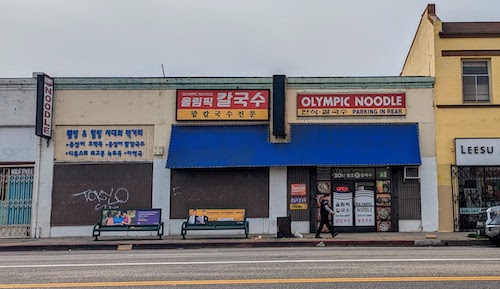
Olympic Blvd. facade

🇰🇷 SOUTH KOREA
📍 4008 W. Olympic Blvd., Arlington Heights, Central Los Angeles
🅿️ Parking lot in back
🥤 No Alcohol

If you arrive by foot or bicycle for your first visit to kal-guksu specialist Olympic Noodle, you might fear that the shop is closed. The sidewalk and street facing side of the restaurant always appears a bit lazy, sometimes the gate is not even open in front of the doors if you show up near opening time. But of course this is Los Angeles and you are not a walk-in customer and have found your way to the small back parking lot and the main entrance from that side.

Once you come in the back door, you will see folks hunched over bowls of pale, milky broths with homemade knife-cut wheat flour noodles and what seems like a whole chicken's worth of meat, or a whole ocean of seafood. While the menu goes in quite a few directions, the six versions of these noodle soups are the reason many people come for their first time. In Los Angeles, business among non-Koreans tips up during the colder winter months, but Koreans (especially in Korea) prefer to eat this soup in the summer.

Two types of kimchi banchan served before meal

When you sit down and order, you will see a generous portion of their homemade kimchi (above) scooped from its home container near the kitchen and slid onto your table. This along with a small plate of pickled radish act as the meal's banchan, and both are delicious and work as complementary tastes to your meals. A pitcher of hot tea arrives at the table without asking as well, and everything you need besides the main course is now there.

As mentioned, most meals here will consist of an order of kal-guksu, literally meaning "knife noodles" in Korean, homemade noodles extruded by knife as the name suggests. And while in Korea people are usually enjoying these kal-guksu soups in the summer, in Los Angeles they become extra crave-worthy even with Koreans when the daytime highs are barely getting above 10°C and the forecast calls for rain.

Dak kalguksu 닭 칼국수

The most basic order here is dak kal-guksu ($16.99, above), what the menu calls "Korean chicken noodle soup" in English. For those that may have grown up having cans of Campbell's opened up for them during sick days, the "Korean" in the title is the important part, a complex broth made with chicken bones and not over-salted. It is fine to eat the bowl as is, but the soup can and should be added to as desired with the condiments on the table and can be supplemented with kimchi in another popular option.

Besides these soups, you will also start to notice something else very popular here on your first visit and any additional meal. Many customers are hunched over bowls that arrive looking like a bowl of chocolate pudding, although the intense steam coming up from it hints at something else. This is actually a red bean soup, served with rice balls or rice balls and the addition of kal-guksu.

Red bean soup with rice balls and noodles 팥칼국수

This is patjuk ($15.99, above, 팥죽), a thick porridge of red beans, here ordered with the kal-guksu because it is difficult to come to Olympic Noodle and not eat their famous noodles. While the kal-guksu soups are often enjoyed in summer, patjuk is definitely a warming bowl meant for wintertime. Unlike red bean desserts, this porridge is intensely savory and rich, and meant to be eaten with both the kimchi and pickled radish so as to cut through these qualities.

The rice balls initially at the bottom of the bowl are the surprise of the day, chewy like mochi and having every enjoyable touch of homemade food. You could be forgiven for not seeing the appeal of patjuk if it was not something that carried nostalgia as well, but even without memories it is worth trying at least once in your life.

Steamed dumplings

Especially if you come with three or four (or more) people, an order of the steamed dumplings ($14.70, above) is a good idea for the table. You may be able to find better dumplings in the area, but these are satisfyingly stuffed with pork and greens and come in a huge portion of twelve. The condiment rack is fun to play with to make dips for your mandu, as well as adding them to soups.

Another fun share dish, and much better than expected is the spicy rice cakes ($15.99, below) which you can add ramyun or jjolmyeon to for an additional $3. Both the rice cakes and the fish cakes are top notch, and the spicy broth is very tasty. Steamed cabbage is interspersed for variety.

Spicy rice cakes with ramyun

Olympic Noodle also makes an array of non-noodle soups, but these have not been spotted on any tables during multiple visits. These range from kimchi jjigae, seaweed soup, spicy beef, and beef ribs and cabbage soups. Depending how often the restaurant is returned to will probably determine whether you go for these on follow-up visits.
 
There is also a summer menu that has promise, with cold noodles in a paprika radish broth, a cold bean porridge with noodles, and one hot option of boiled chicken with ginseng. This last one comes with a price tag almost double the other soups on the menu, immediately creating interest and something to look forward to besides the warmer weather of summer.

🇰🇷🇰🇷🇰🇷

I COULD USE YOUR HELP
Eat the World Los Angeles is and always has been free. It is a hobby born of passion and never solicits money or free food from restaurants. No advertisements block the content or pop over what you read. If this website has helped you explore your city and its wonderful cultures a little better please tell your friends about us and if you have the means to contribute, please consider doing so. Eat the World Los Angeles is a labor of love, but also takes a lot of money and time everyday to keep running.

Thank you!
VENMO: @JAREDCOHEE
CASH APP: $JaredCohee
PAYPAL: (no account necessary, use link)

Wednesday, 7 September 2022

Churrasquitos Los Panfilos

Stand on Venice Blvd.

🇬🇹 GUATEMALA
(Friday and Saturday evenings only, check with vendor for details)
🅿️ Street Parking
💲 Cash and Zelle only
🥤 Cans of Gallo

Underneath a hand-painted sign for MTC Motorcycle Services and surrounded by all the bikes they are working on and selling, a weekends-only Guatemalan churrasco specialist has bloomed. The charcoal grill gets fired up after business is over on Fridays and Saturdays, sending smoke and delicious aromas out onto Venice Blvd. If the blue and white flag went unnoticed by passing Guatemalans, the familiarity of those scents hitting the nose are enough to stop traffic.

Even as temperatures made being outside almost unbearable last weekend, the stand had a constant stream of customers enjoying meals under the red tents and even more getting takeout. Cans of Gallo were kept on ice to keep customers cool, and spirits were up amongst everyone sitting here and the family running the place.

The business takes place under the tent

You will immediately notice that the small makeshift outdoor dining room seems like a community center, where families and friends plan to meet for a specific taste they miss from back home. The proprietors greet everyone they know like they are old friends, and newcomers are welcomed no differently. If space is tight, people shift to make room for all without being asked.

It was with pleasant surprise that those cans of Cerveza Gallo (below) were spotted, as trademark reasons have caused this name to not be allowed in the United States. Guatemala's largest beer producer has had to label their products "Famosa" when exported here, so drinking an actual Gallo somehow seems to taste better and bring back even stronger memories. Homesick folks will find this detail even more rewarding, hopefully it was not just a one time thing.

Cerveza Gallo in a can!

Despite having the name churrasquito (little grill or barbecue), the charcoal grill here is large enough to take many orders at a time. Guatemalan churrasco is an event that is difficult to avoid when you spend any time in cities or small towns of the country, smoke from cooking carne asada, longaniza, chicken, and just about anything else fills the evening skies.

The term is also used for the namesake dish churrasquitos (below), a type of Guatemalan taco served on thicker-than-Mexican homemade corn tortillas that are patted out as an order is placed. The cut of already marinated beef is also thrown on the grill, large enough to require two of these large tortillas once it is plated and served. As would be standard anywhere that the dish is sold, a section of potato and some onions are also grilled and served on the plate.

Churrasquito

Make sure to ask for the final product to be spicy, as this unlocks a blanket of their housemade salsa over the entire thing. If you do not have the built-in tolerance in your fingertips to heat from manual labor and/or cooking, it may take a few minutes before you can pick the whole thing up and start tearing into it with your hands and teeth. Do not ask for a fork and knife, they probably do not have them anyways. The wait just makes the already delicious antojito that much better.

Ten years ago the shuco was mostly unfamiliar outside of the Guatemalan community, but now this ultimate antojito can be found in so many locations that it has gained more notoriety by all in Los Angeles. This is sometimes (mistakenly it could be argued) referred to as a Guatemalan hot dog, but while you can eat this with salchicha, it is nothing like what you find at a Dodgers game.

Shuco mixto (carne, longaniza, salchicha)

The bread is a crisped roll instead of a limp steamed bun, and the toppings are much more ample. A shuco usually has the option to have that salchicha, an even more tasty link of longaniza, or more of that carne asada. If you appreciate a glorious mix, the move here is to get a shuco mixto (above), a combination of all three. It seems not that they divide the same amount of overall meat into three, but take that portion of each and pile it on.

Another common antojito in Guatemala is a plate of crispy fried taquitos (below), filled with a small amount of meat and smothered in tomato salsa. While both the churrasquito and shuco are tasty enough to want to hurt someone, the taquitos seem like an afterthought unfortunately.

Taquitos dorados

Better for next time if a third plate is necessary would be the enchilada, an antojito in Central America that more resembles a Mexican tostada. Oh and what they call a tostadas, which are also available here? Those use the same base but are covered in the simple salsa or black beans rather than being piled high with meat and other toppings.

No matter what you order and enjoy, it is that namesake carne asada delight that will linger in your mind all week after your visit. So what are your plans this Friday night?

🇬🇹🇬🇹🇬🇹

I COULD USE YOUR HELP
Eat the World Los Angeles is and always has been free. It is a hobby born of passion and never solicits money or free food from restaurants. No advertisements block the content or pop over what you read. If this website has helped you explore your city and its wonderful cultures a little better please tell your friends about us and if you have the means to contribute, please consider doing so. Eat the World Los Angeles is a labor of love, but also takes a lot of money and time everyday to keep running.

Thank you!
VENMO: @JAREDCOHEE
CASH APP: $JaredCohee
PAYPAL: (no account necessary, use link)

Wednesday, 1 September 2021

Gish Bac

MÉXICO 🇲🇽
(OAXACA)
Washington Blvd. facade

EDITOR'S NOTE: An updated version of this article (20 December 2024) is available as part of the Free Friday Favorites section of our Substack page. Check that out here:

It seems like much longer than just over a decade since this Arlington Heights institution opened and immediately starting attracting Oaxacan communities and general food lovers alike. While it may be slipping off listicles and year-end round-ups that need to infuse freshness and fad, it consistently makes some of the best Oaxacan food in the city and that will probably never change.

For that reason you are likely to hear Zapotec or Mixtec from the adults at neighboring tables, and in the next sentence their children speaking English in response. It may be sleepy for a weekday lunch, but there is always a table or two filled with a couple or men working nearby. Come on a Sunday after one of the Spanish-language masses ends across the street at St. Paul's and it may take a while to get a table.

Chips, mole negro, and a tlayuda are served

In Zapotec, "gish bac" translates roughly to what people from Tlacolula call their city, a name that itself is Nahuatl for "place of abundance." This abundance is probably best seen on a Sunday in the city's famous market, where barbacoa vendors will probably yawn if you tell them you did not know barbacoa was a thing in Oaxaca. There in the state's second largest city, it is most certainly more than a thing.

The other specialties of Oaxaca are all done with a skilled set of hands in the kitchen here, which seemingly never has an off day when it comes to quality. For many diners this starts with the large tlayudas you can see stacked in the kitchen. Like any Oaxacan restaurant worth its salt, these are imported from a trusted source in that state, and because they contain so little water can survive the journey and come back to life when needed.

Tlayuda with cecina and tasajo

To do this, a base layer of asiento is laid down first, followed by a thin streak of beans and stringy cheese before going on the griddle and the rest of the colorful toppings and fresh vegetables are added. You can mix and match up to three meats on your tlayudas, the usuals of cecina, tesajo, and chorizo. A two meat tlayuda (above) costs $16.75 and is already a ton of food.

Note that cecina in Oaxaca is a thinly sliced adobo-rubbed pork loin and tesajo is salt-cured beef. The two pair together wonderfully.

Mole negro

The skill of the kitchen is maybe even more apparent with orders of any of their three moles. Mole negro ($15.85, above) is dark like an oil spill, its gloss reflecting the fluorescent lights overhead. And just like an oil slick, if you look closer you will see different colors within, a hint of the many flavors about to hit your tongue.

Dried chilhaucle negro chiles give the mole its namesake color, but the first flavors to hit your mouth are hoja santa and star anise. Throw in ground nuts, dozens of other herbs, spices, and chiles, and you could spend the entire meal just trying to figure out the ingredients of such a complex and wonderful flavor. Better yet, do not think about it at all and just enjoy bites with some of their big handmade corn tortillas or rice.

Mole coloradito

More on the sweet side (but not overly) and also dark and full of deep reds like the name would suggest, the mole coloradito ($15.85, above) is just as full or somehow maybe even fuller of flavors. Once again, one ingredient does not dominate the others, while the color this time is created by dried ancho chiles.

Both of these moles are presented with chicken and can be enjoyed with dark meat or breast for $2 extra for some reason. The restaurant also makes a mole amarillo that can be eaten with beef or chicken.

Tacos de barbacoa enchilada with consomé

As you may have guessed from the mention earlier, barbacoa plays an important roll at Gish Bac. On weekends you can try the style the chef used to cook in Tlacolula's market; barbacoa blanca named not for the finished product's color but rather the fact that the lamb is not rubbed with adobo or other colorful marinades and uses salt and a simple garlic and oregano paste.

On weekends and any other day you can enjoy the barbacoa enchilada, goat marinaded with chile guajillo. This can be as a full plate or two tacos de barbacoa ($15.45, above) which also comes with a bowl of consomé. If you come on Tuesdays, the price for the two tacos is reduced to $10. The large corn tortillas are full of barbacoa, wrapped like burritos, and much more filling than they might appear in a photo. Squeeze in plenty of lime juice to cut the richness and splash in some of their tasty green salsa that comes with the pre-meal chips if that suits you.

Costillas de puerco en salsa verde

There are a couple dishes that might be seen on the menus of more "general" Mexican restaurants, like costillas de puerco en salsa verde ($14.45, above). If you are in the mood for one of these, it is with great confidence that you know the kitchen will knock it out of the park with their supreme skill.

They have a few nice homemade aguas frescas for $4, but go for the horchata oaxaqueña ($5, below), an upgrade that tops the drink with walnuts, canteloupe, and nieve de tuna. This last ingredient is a wildly popular ice sorbet made with cactus pear. Agua de chilacayota is also available when that gourd is in season.

Horchata Oaxaqueña

📍 4163 W. Washington Blvd., Arlington Heights, Central Los Angeles

🇲🇽🇲🇽🇲🇽

I COULD USE YOUR HELP
Eat the World Los Angeles is and always has been free. It is a hobby born of passion and never solicits money or free food from restaurants. No advertisements block the content or pop over what you read. If this website has helped you explore your city and its wonderful cultures a little better please tell your friends about us and if you have the means to contribute, please consider doing so. Eat the World Los Angeles is a labor of love, but also takes a lot of money and time everyday to keep running.

Thank you!
VENMO: @JAREDCOHEE
CASH APP: $JaredCohee
PAYPAL: (no account necessary, use link)

Monday, 12 April 2021

Tacos Naomi


🇲🇽 MÉXICO
 (Stand sets up along 10th Avenue, east side of The Market by Superior parking lot)
🅿️ Ample parking in plaza
💲 Cash Only
🥤 No Alcohol
 
EDITOR'S NOTE: An updated version of this article (06 September 2024) is available as part of the Historical section of our Substack page. Check that out here:

Tacos Naomi has five locations around the city, including three in the Valley and another at Obama and La Brea. That last one and the one featured in this article are in front of Superior grocery stores, but it is only this location in Mid City that makes handmade tortillas and warranted a visit to start exploring the franchise. And then quite a few more visits after having some really delicious tacos al pastor.

On the occasion of a slower night, marinated pork from the trompo and other meats cooked on their charcoal grill spend a bit too much time in steam table compartments, so do your best to pick a time that should be busy. During higher turnover times the smoke from that grill will be sending the wonderful scents of chorizo, carne asada, and chicken all around the parking lot, and better yet your tacos are going to wow.

Tacos al pastor.

The taquero who minds the trompo is very good at what he does, keeping the spinning meat perfectly seared and ready to slice into their freshly made tortillas. Tacos (above) are all $2 each and made with a single tortilla, which holds up well even with their generous portions of meat and salsas. He is also in charge of making other tacos and burritos, but remains friendly and is also a showman when the mood is right.

The salsas they make are plentiful, they usually have two of both red and green salsas, a hot and mild version of each that are all tasty, as well as freshly made guacamole to throw on since this is TJ-style. Each customer will be asked individually, so step up and let him know exactly how you like your toppings and your dreams will come true.


Burritos ($8 with cheese griddled into the tortilla, above, $7 without) are made with packaged flour tortillas, but the quality of the wrapper is still very good. Ask for a campechano to get a lovely combination of two of the meats you will see on the grill: carne asada and chorizo. Both are full of smoke and flavor and cooked perfectly by the crew who will also add up your bill at the end.

You can get these made to your liking as well, with or without rice and beans, and packed securely in that tortilla with all the salsa and guacamole you may or may not desire. If other antojitos strike your fancy on a particular evening, they also do cheesy items like mulitas and gringas.

🇲🇽🇲🇽🇲🇽

I COULD USE YOUR HELP
Eat the World Los Angeles is and always has been free. It is a hobby born of passion and never solicits money or free food from restaurants. No advertisements block the content or pop over what you read. If this website has helped you explore your city and its wonderful cultures a little better and you have the means to contribute, please consider doing so. Eat the World Los Angeles is a labor of love, but also takes a lot of money and time everyday to keep running.

You can Venmo me @JAREDCOHEE or click here to send PayPal donation, no account is necessary. Thank you!

Sunday, 7 April 2019

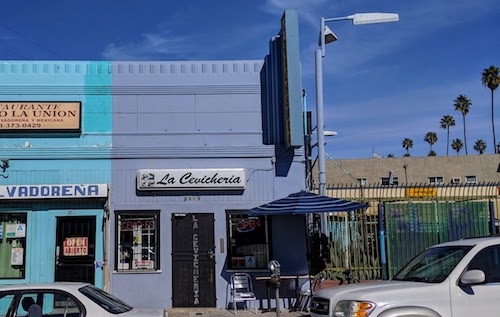
La Cevicheria


🇬🇹 GUATEMALA

EDITOR'S NOTE: The original article from 2019 has been updated to include new photos and prices. An updated version (08 December 2023) is available as part of the Historical section of our Substack page. Check that out here:

While Pico Boulevard is certainly no seaside community and the table outside gets a touch hot on most afternoons, somehow once the screen door of this 16 year old restaurant closes behind you it feels much closer to the ocean. The nautical themes and soft blue paint help, sure, but the feelings induced here are pure seafood shack and not unlike the modest places that dot the Pacific coastline of Central America visited many years ago.

In the ceviche spectrum of Los Angeles, Guatemala may not get its proper dues but that is only because it is overshadowed by some of its Mexican and Peruvian cousins and most of the 230,000+ folks come from more inland portions of the country. With no major coastal highway, the beaches and seaside towns are reached from a series of roads from the interior and feel secluded. If you want to relive past trips, or get a sense of what a future trip would feel like, come to Mid-City's La Cevicheria.

Tostadas de ceviche de pescado y camarón

Knowing tastes and trends of the city before Angelenos did themselves, and not to mention the desires of the entire neighborhood and its laborers, the husband and wife team here have elected to put more options than those solely from their home country of Guatemala. But if we're being honest, the aguachiles might be better at everyone's favorite Nayarit seafood empire and the Peruvian ceviches bite sharper in the San Fernando Valley.

Full orders of ceviche are fairly large as you will see in a bit, so "compromising" with tostadas can be more manageably good deals and a fun mashup of Guatemalan and Mexican ceviche-eating styles. When the name of the restaurant is practically smacking you in the face to try as many as possible, this is the easiest route. Above are the tostada de pescado ($6, left) and tostada de camarón ($6, right), both excellent and topped with a couple wedges of avocado.

Ceviche de concha negra mixto

Deserving of a larger order is the ceviche de concha negra mixto ($20, above), always the source of most of what gets written about this place because of its English translation to "bloody clams." In Spanish this is "black shells or conches," so it makes sense that the resulting color is somewhere in between black and blood red, with slicks of both mixed in.
 
There are actually three levels of macho to order your bloody clams at, with this mixed ceviche being level three (ie: least macho). Mixed with both shrimp and octopus, the full brine and chewy texture of the clam itself is reduced. For $1 less you can experience them alone but still cut into small pieces, or as an appetizer the clams are available on the half shell for $15 to be enjoyed in all their glory.

No matter what, the taste of the sea is always there. Sometimes this can be a drag with seafood, but bloody clam brine seems magical and done perfectly. As you see above, packages of Saltines arrive with orders of ceviche, exactly as happened at those shacks in Guatemala.

Ceviche chapin

More magic comes in the bowl of ceviche chapin ($15, above), which the menu shows including ten ingredients. Besides the seafood, the most instantly recognizable on your tongue are mint and Worcestershire sauce, that secret (British) ingredient of Guatemalan ceviches. The mixture consists of shrimp, octopus, and crab, the latter probably being imitation but at this price point it is hard to complain about that.

The smoother tastes and textures pair perfectly with concha negra, and leaving one out is firmly unrecommended.

When the kitchen has caught up with all their orders, do not be surprised if the male proprietor makes his way out to the dining room to ensure all his customers are taken care of and enjoying their meals. You can tell it is a passion. He also might recommend the (slightly) off-topic mariscada caribeña ($18, below), a soup from another ocean.

Mariscada caribeña

This coconut-based stew is sweet and slightly spicy and hits more of the favorites in terms of seafood ingredients. Get good chunks of white rice to soak it in or use it as a topping for mussels and squid.

While there does seem to be a BYOB policy in place, just as good with the seafood dishes is the homemade limeade ($4, not shown), refreshing and cold and not too sweet at all. This seems to be the choice of many of the workers that come in for lunch and you will be thankful to follow their lead.

Tacos de pescado
Tacos de pescado ($8 for 2)

Aguachile
Aguachile ($20)

Extra tostadas


🇬🇹🇬🇹🇬🇹

I COULD USE YOUR HELP
Eat the World Los Angeles is and always has been free. It is a hobby born of passion and never solicits money or free food from restaurants. No advertisements block the content or pop over what you read. If this website has helped you explore your city and its wonderful cultures a little better please tell your friends about us and if you have the means to contribute, please consider doing so. Eat the World Los Angeles is a labor of love, but also takes a lot of money and time everyday to keep running.

Thank you!
VENMO: @JAREDCOHEE
CASH APP: $JaredCohee
PAYPAL: (no account necessary, use link)